

Beyond Cooling: How Your Air Conditioner Actually Manages Indoor Humidity

The 'Cold But Clammy' Dilemma: Why Temperature Isn't Everything
If you find yourself shivering while still feeling sticky, you need to look beyond cooling: how your air conditioner actually manages indoor humidity is the true measure of its performance. Your system might be running continuously, blowing icy air through the vents and driving the thermostat down to 68 degrees, yet your skin feels damp and the air feels heavy. This uncomfortable sensation is a clear signal that your home's thermal environment is out of balance. True thermal comfort requires addressing both the temperature you read on the wall and the invisible moisture lingering in the air space.
The critical decision point for many homeowners is recognizing whether their system is appropriately sized to handle this dual workload, or if it is merely dropping the temperature without properly conditioning the space. When the system fails to extract moisture, the resulting environment is not just uncomfortable; it can actively degrade your home's air quality. We know that maintaining an indoor relative humidity above 50-60% promotes discomfort and creates an environment where poor indoor air quality thrives. For professional guidance on achieving a balanced home environment, exploring specialized Air Conditioning solutions is the first step.
Which of the following is the basic purpose of an air conditioner?
The basic purpose of an air conditioner is the simultaneous removal of heat (sensible heat) and moisture (latent heat) to achieve complete thermal comfort. While most people associate air conditioning exclusively with lowering the temperature, the process is technically designed to alter the state of the air entirely. An air conditioning unit is, by its mechanical design, a large-scale dehumidifier. It utilizes a rapid temperature drop across its internal components to force moisture out of the air before circulating that treated air back into your living space.
Sensible Heat vs. Latent Heat
To understand why a room can feel terrible even when the thermostat says it should feel great, you have to separate heat into two distinct categories. When an air conditioning system is evaluated for its cooling capacity, engineers look at how well it handles both types of heat loads.
• Sensible Heat — What It Measures: The measurable thermal energy in a space. — How You Experience It: The physical sensation of hot or cold; what you read on a standard thermometer. — AC Removal Method: Blowing air over cold coils to lower the ambient temperature.
• Latent Heat — What It Measures: The invisible moisture load suspended in the air. — How You Experience It: The feeling of mugginess, stickiness, or heaviness; sweat failing to evaporate from your skin. — AC Removal Method: Condensing water vapor into liquid and draining it out of the house.
The Definition of True Air Conditioning
Conditioning the air means changing its physical properties to make it suitable for human comfort. If a system only lowers the sensible heat, it is acting as an air cooler, not an air conditioner. When latent heat is left behind, the air retains its moisture, leading to that distinct "cold but clammy" feeling. Addressing this invisible moisture load is why comprehensive indoor air quality services focus heavily on humidity control alongside standard temperature management.
The Hidden Dehumidifier: How Evaporator Coils Extract Moisture
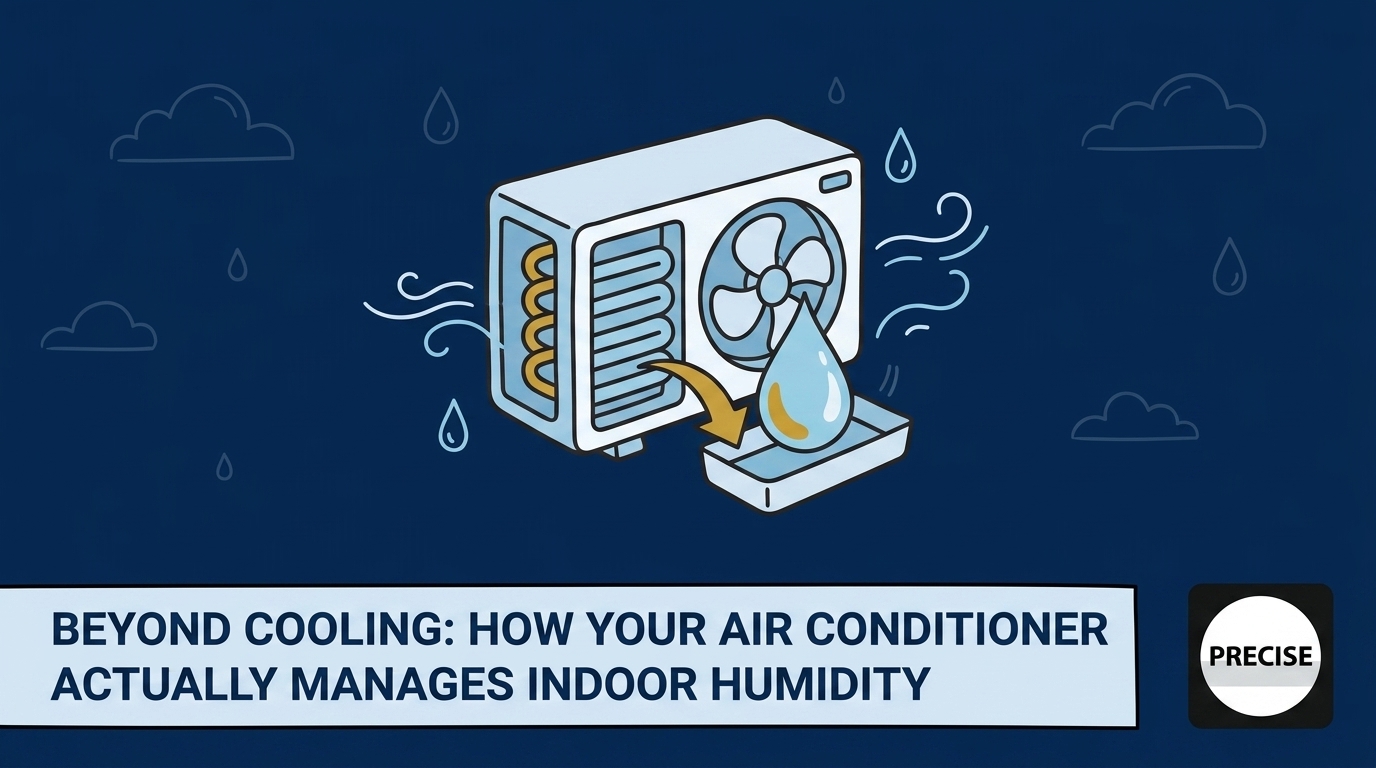
Your air conditioning system does not actually "create" cold air. Instead, it operates as a heat and moisture transfer machine. The magic of dehumidification happens entirely at the evaporator coil, an A-shaped or N-shaped component located inside your indoor air handler or furnace. When the system is running properly, this coil facilitates a continuous cycle of condensation.
The Role of Condensation in Cooling
The mechanics of moisture extraction rely on basic physics. Just as a glass of ice water sweats on a warm day, your air conditioner forces the moisture in your home's air to condense into liquid.
1. Warm Air Intake: The blower motor pulls warm, humid air from your living spaces through the return ducts and passes it through the air filter.
2. Thermal Transfer: This warm air is forced over the evaporator coils, which are filled with super-chilled liquid refrigerant (often sitting around 40 degrees Fahrenheit).
3. The Condensation Effect: Because the coils are significantly colder than the dew point of the indoor air, the invisible water vapor (latent heat) instantly condenses into liquid water droplets on the surface of the metal fins.
4. Moisture Removal: These water droplets drip down the coil into a condensate drain pan beneath the unit. From there, a PVC drain line channels the liquid safely outside your home or into a designated drain.
5. Conditioned Air Delivery: The air that pushes past the coil is now both sensibly cooler (lower temperature) and latently drier (lower humidity). It is then distributed back through the supply vents.
Why Cycle Length Matters
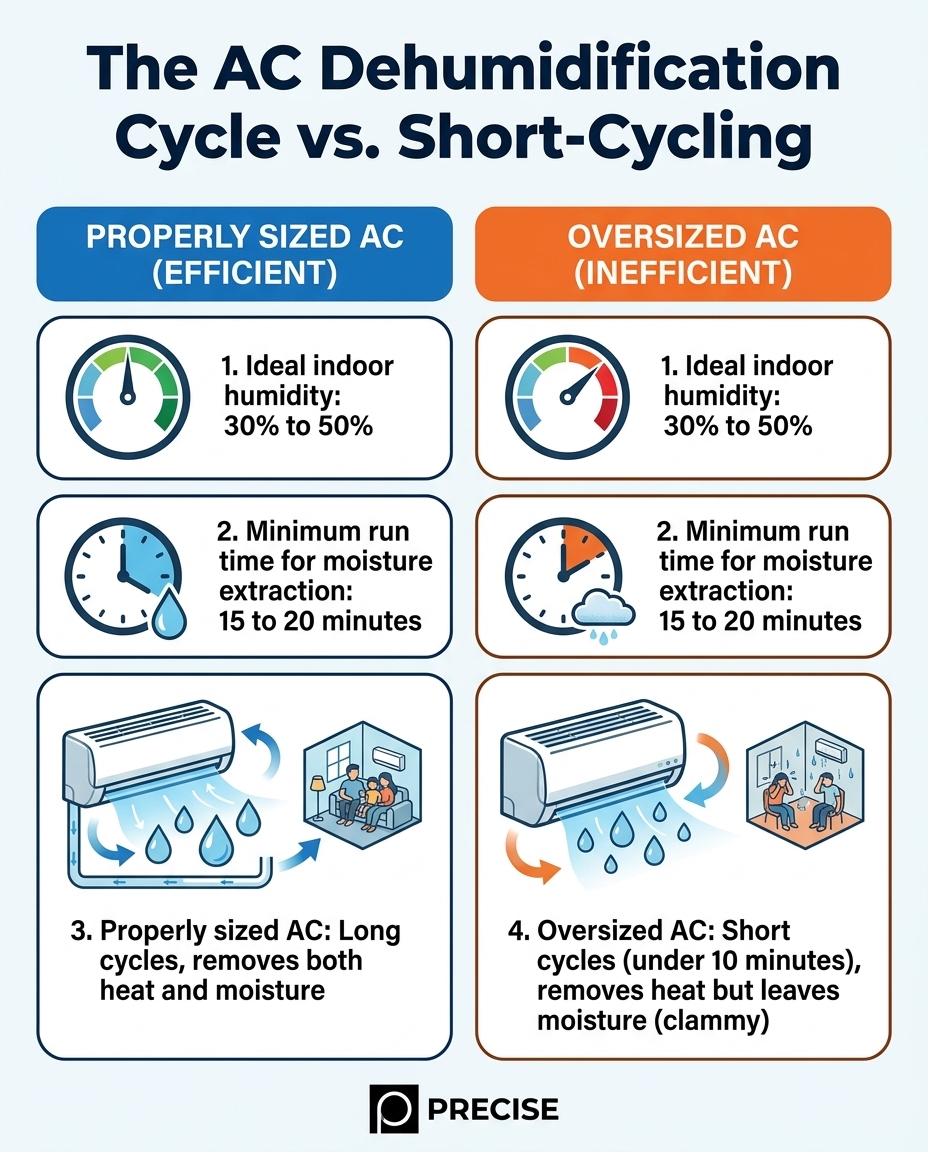
The most crucial factor in this entire process is time. The evaporator coil does not instantly drop to its maximum cooling temperature the second the system turns on. It takes approximately 15 to 20 minutes of continuous runtime for the coil to get cold enough and for the airflow to stabilize enough to start extracting significant moisture. During late summer high-humidity days, the latent heat load increases dramatically. If your system runs in brief five- or ten-minute bursts, it will lower the sensible temperature, satisfy the thermostat, and shut off before the condensation process has a chance to pull any meaningful moisture out of the air.
The 'Bigger is Better' Myth: Why Oversized Units Leave You Clammy
One of the most persistent and damaging myths in residential HVAC is the belief that a larger capacity air conditioner will cool a house better, faster, and more efficiently. In reality, oversizing an air conditioning unit is the primary cause of poor indoor humidity control. A system that is too large for the square footage and thermal load of the home will flash-cool the space, dropping the sensible temperature so rapidly that the thermostat shuts the system down prematurely.
The Short-Cycling Trap
This phenomenon is known as short-cycling. When an oversized unit turns on, it blasts a massive volume of cold air into the rooms. The thermostat, sensing that the target temperature of 72 degrees has been reached, signals the system to turn off after just eight or ten minutes. Because the system never reaches the critical 15-to-20 minute runtime threshold, the latent heat remains trapped indoors. The result is a home that is 72 degrees but feels damp, sticky, and distinctly uncomfortable. Furthermore, short-cycling places immense mechanical stress on the compressor, as the system draws the most electricity and endures the most wear-and-tear during startup.
The Importance of Proper Load Calculations
To prevent short-cycling, a system must be meticulously matched to the home's specific requirements through a professional process known as a Manual J load calculation. This calculation takes into account the home's square footage, ceiling height, insulation quality, window placement, and local climate data to determine the exact cooling capacity required. Proper system installation often involves overcoming unexpected challenges to ensure the final product operates flawlessly. For example, during a complex HVAC system installation performed during the spring, a logistics issue arose due to strict health and safety protocols. The Precise Air Systems team promptly addressed and resolved the logistics issue that occurred during installation, ensuring the perfectly sized unit was installed smoothly and professionally. Precise Air Systems' expertise in proper AC sizing, system design, and installation ensures your unit is matched to your home's unique load requirements, preventing short-cycling and guaranteeing total comfort.
Coastal Marine Layers and Indoor Moisture: The Local Climate Impact
Your local microclimate plays a massive role in how your air conditioner handles latent heat. In Southern California, the weather patterns introduce unique challenges that go beyond simple high temperatures. The Los Angeles coastal marine layers, often referred to as June Gloom, can push morning outdoor relative humidity to 80-90%. This dense, cool moisture easily infiltrates the home.
Because the sensible temperature during these marine layer events is relatively mild—often hovering in the upper 60s or low 70s—your air conditioner's thermostat may not register a need to turn on. The house isn't hot, but the indoor air becomes heavy and damp. Additionally, rare but impactful late-summer tropical moisture surges can dramatically increase the latent heat load without pushing the thermometer into triple digits. These specific weather patterns require an AC system that can run consistent, low-capacity cycles to extract moisture without freezing out the occupants. Understanding how weather and rain affect your AC unit is critical for managing these high-moisture periods effectively.
Taking Control: How to Monitor and Manage Your Home's Latent Heat
Homeowners do not have to accept a clammy indoor environment as a normal part of summer. By actively monitoring your home's metrics and utilizing modern HVAC technology, you can take control of your latent heat load.
Utilizing Smart Controls
• Monitor with a Hygrometer: Purchase a standalone digital hygrometer for your main living space. You want to ensure that your indoor relative humidity remains strictly below the 50-60% threshold. Consistently reading an indoor relative humidity above 50-60% promotes discomfort and indicates a sizing or airflow issue.
• Upgrade to Advanced Thermostats: Modern smart thermostats offer advanced features that track both temperature and humidity. Some models include "overcool" features that allow the AC to run up to three degrees past the set temperature specifically to extract lingering moisture.
• Adjust Fan Settings: Always keep your thermostat's fan setting on "Auto" rather than "On." When the fan runs continuously after the compressor shuts off, it blows the water resting on the wet evaporator coil straight back into your living space, instantly spiking indoor humidity.
System Optimization Techniques
• Invest in Variable-Speed Technology: If you are replacing your system, consider a variable-speed compressor and air handler. Unlike single-stage units that only run at 100% capacity, variable-speed units can run at 30% or 40% capacity for hours at a time. This provides continuous air circulation and relentless moisture extraction without overcooling the house.
• Maintain Unrestricted Airflow: Keep all supply and return vents fully open. Closing vents in unused rooms alters the static pressure of the ductwork, reducing the volume of air passing over the evaporator coil and crippling the system's ability to dehumidify.
• Schedule Routine Maintenance: A dirty air filter or a coil covered in dust insulates the cold refrigerant from the warm air, preventing the condensation process from occurring efficiently. Regular filter changes and professional coil cleanings are non-negotiable for latent heat management.
Frequently Asked Questions About AC and Indoor Humidity
Why is my house humid with the AC on?
Your house is likely humid with the AC on because the unit is short-cycling or the evaporator coil is dirty. When a system is oversized for the home, it cools the air too quickly and shuts off before it has time to extract the moisture. Alternatively, if the blower speed is set too high or the system lacks routine maintenance, the air moves over the coils too fast to allow proper condensation to form.
Does AC reduce humidity?
Yes, reducing humidity is a fundamental part of how an air conditioner functions. As warm indoor air is blown across the freezing cold evaporator coils, the moisture in the air condenses into water droplets, which are then drained out of the house. This continuous process naturally lowers the humidity levels in your home, provided the system runs for long enough cycles.
How long does it take for an AC to dehumidify a house?
An air conditioner typically needs to run for 15 to 20 minutes continuously before it begins to extract significant amounts of moisture. For a home that has been left unconditioned for several days and has accumulated a high latent heat load, it may take several hours of steady operation to fully pull the deeply embedded humidity out of the air, furniture, and fabrics.
Does a bigger AC remove more humidity?
No, a bigger AC actually removes less humidity. An oversized unit will lower the sensible temperature very rapidly, satisfying the thermostat and shutting off in just a few minutes. Because it never reaches the necessary 15-to-20 minute runtime required for optimal condensation, a larger unit will leave the vast majority of the moisture trapped inside your home.
What is the ideal indoor humidity level during peak summer?
The ideal indoor relative humidity level during peak summer should sit between 30% and 50%. Staying within this range ensures that sweat can evaporate naturally from your skin, making you feel cooler at higher temperatures. Allowing the humidity to climb above 60% not only makes the home feel sticky and warm but also creates a breeding ground for biological growth and poor air quality.
Achieving True Thermal Comfort in Your Home
Achieving a truly comfortable home means recognizing that the number on your thermostat is only half of the equation. A perfectly balanced indoor environment requires the seamless management of both sensible heat and latent heat. If you are constantly adjusting the thermostat downward but still feel sticky and uncomfortable, your system is failing to execute its dual purpose. An appropriately sized unit is the ultimate key to preventing that cold but clammy feeling, ensuring that your system runs in long, steady cycles that strip the heavy moisture from the air.
If you suspect your system is oversized, short-cycling, or simply failing to manage moisture effectively, it is time to seek professional guidance. Having a technician perform a comprehensive load calculation and assess your ductwork can reveal exactly why your home feels unbalanced. By exploring professional energy efficiency services, you can optimize your current setup or design a new solution that prioritizes complete comfort. When you understand the science of beyond cooling: how your air conditioner actually manages indoor humidity, you are empowered to make decisions that keep your home crisp, dry, and welcoming all season long.
Customer
Testimonials
Our customers consistently praise the exceptional service and professionalism of our team. They appreciate the honest advice, meticulous work, and the care taken to ensure their satisfaction.

.webp)
Service Areas
