

Heating Repair in Fullerton, CA

Plum HVAC offers expert heating repair for Fullerton, CA homeowners, addressing common failures, diagnostic steps, repair procedures, response times, pricing, warranties, scheduling, and preventive maintenance. You can expect thorough assessments, transparent estimates, flexible appointment options, and quick emergency support when needed. Our focus is on restoring comfort and protecting your home during cold periods. We highlight on-site diagnostics, safety checks, and parts replacement, along with warranty coverage and how to easily schedule service with Plum HVAC. Timely action, safety, and ongoing maintenance benefits are always our priority.
Heating Repair in Fullerton, CA
When your heating system fails on a chilly Fullerton morning, reliable heating repair matters. Fullerton homes face a mild Mediterranean climate with cool, damp mornings in winter that expose neglected or aging heating systems. Whether you have a gas furnace, heat pump, ductless mini-split, or electric resistance heat, timely, expert heating repair in Fullerton, CA restores comfort, improves safety, and reduces energy waste.
Common heating failure symptoms in Fullerton homes
Recognizing the signs of a failing system helps prioritize repairs before a complete breakdown. Common heating repair issues in Fullerton include:
- No heat at all: system powers on but produces no warm air.
- Uneven heating: some rooms stay warm while others remain cold, often due to duct leaks, zoning issues, or airflow restrictions.
- Strange noises: banging, rattling, or squealing can indicate loose components, failing blower motors, or failing bearings.
- Frequent short-cycling: system turns on and off rapidly, hurting efficiency and lifespan.
- High energy bills: increased energy use for the same comfort level often signals component failure or poor combustion efficiency.
- Delayed or failed ignition: pilot lights or electronic ignition problems on gas furnaces.
- Foul or unusual odors: burning or gas smells require immediate attention; carbon monoxide risks must be treated as an emergency.
Fullerton’s seasonal use pattern — long periods without heavy heating followed by sudden demand in cooler months — often exposes hidden problems when systems are called into service.
On-site diagnostic steps
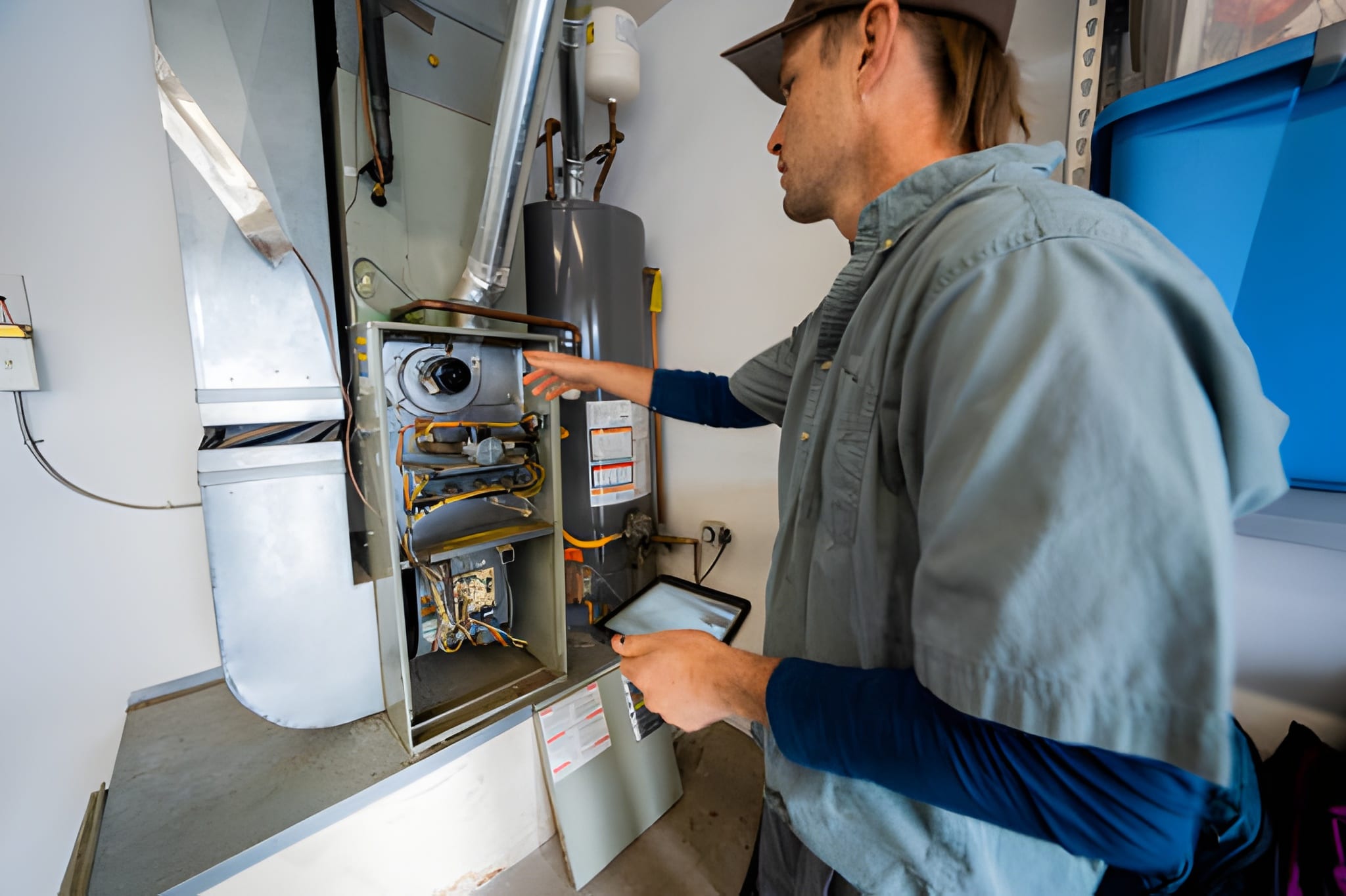
A thorough on-site diagnostic separates a quick fix from a necessary replacement. Typical diagnostic steps include:
- Safety and basic checks: verify power, thermostat settings, breaker and fuse status, and gas supply continuity.
- Visual inspection: examine the furnace or heat pump cabinet, burner assembly, heat exchanger surface, and visible wiring for corrosion, soot, or damage.
- Airflow assessment: inspect filters, registers, and return vents; measure static pressure and airflow to identify blockages or ductwork leakage commonly found in older Fullerton homes.
- Ignition and combustion tests: for gas systems, test ignition sequence, flame sensor functionality, and combustion characteristics.
- Electrical component testing: check capacitors, relays, contactors, and control boards for failures that cause motors and fans to stop or run intermittently.
- Motor and blower checks: test blower motor operation, bearings, belts, and fan balance.
- Heat pump diagnostics: measure refrigerant charge, check reversing valve operation, and test defrost cycle performance.
- System operation run: let the system operate and monitor temperature rise, cycle times, and any abnormal sounds or vibrations.
- Safety sensor verification: verify thermostat, limit switches, flame sensors, and carbon monoxide detectors where applicable.
A clear diagnostic report will outline findings, recommended repairs, and cost estimates.
Typical repair procedures and parts replacement
Repair scope varies from simple component replacements to more extensive system repairs. Common repair actions include:
- Filter replacement and duct cleaning: quick improvements that restore airflow and reduce strain.
- Thermostat calibration or replacement: resolves incorrect setpoint or communication issues.
- Ignition and flame sensor cleaning or replacement: restores reliable burner operation on gas furnaces.
- Blower motor or capacitor replacement: addresses weak airflow and noisy motors.
- Control board and relay replacement: fixes intermittent starting and control failures.
- Gas valve and pilot assembly repair: for gas-fired systems with ignition problems.
- Heat exchanger inspection and repair: cracked exchangers are a safety concern and often require replacement.
- Refrigerant service and compressor repairs: for heat pumps, correcting leaks and restoring charge; compressor issues may call for larger repairs or replacement.
- Duct sealing and zone control repairs: improves evenness of heating and reduces wasted energy.
Repairs are prioritized by safety, system longevity, and cost-effectiveness. In many cases, a targeted part replacement and safety check restore reliable service; in other cases, extensive damage or age may make full system replacement the more economical and safer option.
Expected response times and emergency service availability
Response expectations in Fullerton typically reflect seasonal demand and the severity of the issue.
- Emergency conditions: situations that pose immediate safety risks, such as gas smells, suspected carbon monoxide, or total heating failure during extreme cold, are treated as top priority and may receive same-day emergency response when resources allow.
- Urgent repairs: unsafe operation or risk of rapid deterioration generally receive next-available appointments, often within 24 hours.
- Routine repairs: non-emergency diagnostics and repairs are commonly scheduled within 24 to 72 hours depending on technician availability and parts.
Technicians in the region are familiar with local patterns of demand and will document severity and timing during the diagnostic report to determine appropriate scheduling.
Pricing approach and warranty coverage
Heating repair pricing should follow a transparent and predictable approach:
- Diagnostic fee: many services use a standard diagnostic or service call fee that covers the on-site assessment and recommended estimate.
- Itemized estimates: repair estimates list parts, labor, and any permits required, with clear distinctions between recommended and optional work.
- Flat-rate labor or time-and-materials: either a flat repair price for common jobs or a time-and-materials approach depending on the complexity; estimates should clarify which method applies.
- Parts sourcing and quality: technicians typically offer OEM or equivalent replacement parts; quality components affect longevity and warranty terms.
- Warranty coverage: most repairs include a limited workmanship warranty for a stated period, while replacement parts carry the manufacturer warranty. It is standard to receive a written warranty summary specifying coverage length for labor and parts.
This pricing transparency helps homeowners in Fullerton compare options and make informed choices that balance immediate cost with long-term value and safety.
How scheduling a service call typically works
Scheduling is organized to match urgency and provide necessary information for efficient service:
- When arranging service, expect to provide the service address, basic system type (gas furnace, heat pump, ductless mini-split), make and model if available, and a description of symptoms and when they occur.
- Appointments are typically offered in windows to allow travel and diagnostic time; for urgent issues, same-day or next-day slots may be available.
- Technicians may request permission to access mechanical rooms, attic spaces, or rooftops where equipment is located and may advise about parking or gate access ahead of arrival.
Preparing this information reduces diagnostic time and helps technicians arrive ready to resolve the problem efficiently.
Preventive maintenance and long-term benefits
Prompt repair not only restores comfort but also prevents small issues from becoming costly failures. For Fullerton homes, seasonal maintenance before late fall reduces the chance of breakdown when colder weather arrives. Benefits of timely repair and maintenance include:
- Improved safety and reduced carbon monoxide risk.
- Better energy efficiency and lower utility bills.
- Extended equipment lifespan and fewer emergency repairs.
- More consistent home comfort and quieter operation.
Regular inspections, filter changes, and attention to early symptoms preserve system performance and protect home comfort through Fullerton’s cooler months.
Customer
Testimonials
Our customers consistently praise the exceptional service and professionalism of our team. They appreciate the honest advice, meticulous work, and the care taken to ensure their satisfaction.

.webp)
Service Areas
