
What a Whole-Home Air Scrubber Actually Does for LA Air
Between wildfire smoke, freeway corridors, and long allergy seasons, LA indoor air works hard. Here's what air scrubbers, UV systems, ventilation, and duct sealing each actually do — and the order we'd install them in.
By the Precise Air Systems, Inc. Team — reviewed by our senior technicians with 52 years of Los Angeles HVAC experience. Family-owned since 1975 · CA Lic #428900 · Mitsubishi Electric Elite Dealer.
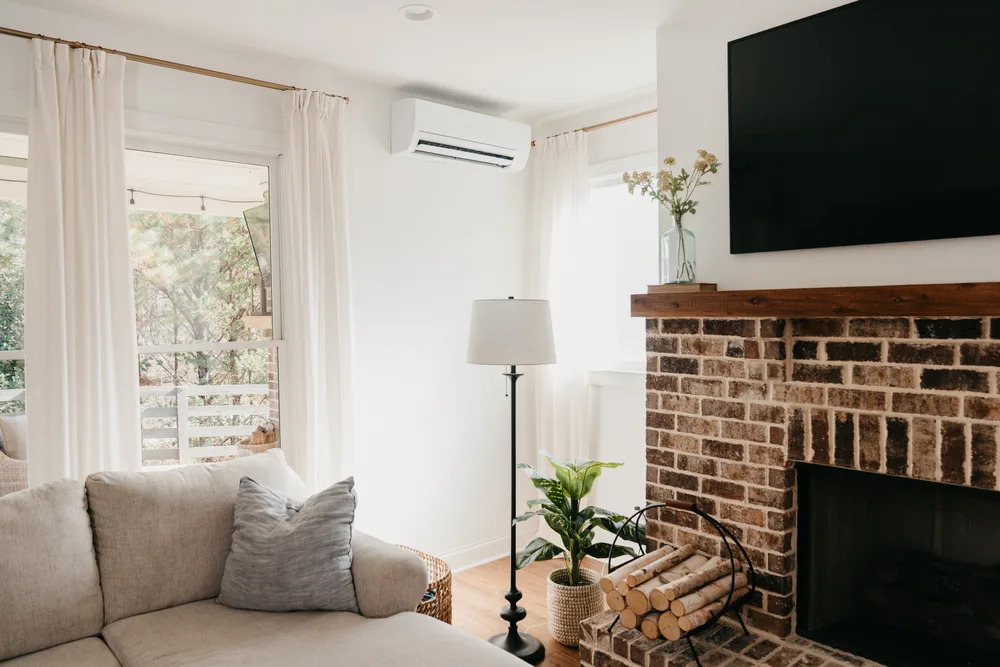
The short answer: a whole-home air scrubber mounts inside your ductwork and actively treats the air your system circulates — reducing airborne particles, odors, and contaminants throughout the house rather than in one room. It is one layer of an air-quality stack, and the honest advice is that the right first layer differs by home: sometimes it's the scrubber, sometimes it's a better filter, and in a lot of older LA homes it's actually the ductwork.
Why does LA indoor air need help at all?
Los Angeles homes pull in more airborne load than most: wildfire smoke seasons (see our complete smoke defense plan), freeway-corridor particulates, long pollen seasons, and — in older housing — duct systems that leak attic dust straight into the airstream. Indoor air quality is not a luxury conversation here; it's maintenance.
What does each layer of the stack actually do?
- Air scrubbers — actively reduce airborne particles, odors, and contaminants throughout the home as air cycles through the ducts. Continuous, whole-home, zero floor space.
- UV light systems — target biological growth at the indoor coil and in the airstream. The coil is dark, damp, and warm — exactly where growth starts; UV keeps it clean at the source.
- Controlled ventilation — brings in measured, filtered fresh air instead of relying on leaks and cracked windows. Tight homes need this to keep CO₂ and indoor pollutants from accumulating.
- Duct cleaning & sealing — stop the system from re-circulating years of dust and from pulling unfiltered attic/crawlspace air in through return-side leaks. In older LA homes this is often the highest-value first move.
- High-efficiency filtration — the passive backbone. EPA guidance points to MERV 13-class filtration for fine particles, provided your blower and ducts can support the added resistance — we verify before we upgrade.
In what order should a homeowner add layers?
Our honest sequence for a typical older LA home: 1) verify and seal the ducts (stop importing dirty air), 2) upgrade filtration to what the system safely supports, 3) add the scrubber for active whole-home treatment, 4) UV at the coil if biology or humidity history warrants it, 5) ventilation if the home is tight or CO₂ runs high. A newer, tight home might start at step 2 or 3. This is exactly the logic the air quality check tool walks you through.
We'll assess your system and recommend only what your home actually needs — transparent pricing, no hidden fees, and no selling you layer four when layer one is the problem.
Prefer a straight answer from a person?
Transparent, upfront pricing and honest recommendations — the standard since 1975.
Frequently asked questions
Air scrubber vs. air purifier — what's the difference?
A portable purifier (HEPA unit) cleans the room it sits in; an air scrubber installs inside the ductwork and actively treats air for the whole house on every fan cycle. They complement each other: whole-home baseline from the scrubber, fast room-level scrubbing from portables where you sleep.
Do air scrubbers help with wildfire smoke?
They help as part of a layered defense — active treatment plus high-efficiency filtration plus a closed-up house. During major smoke events, EPA guidance emphasizes recirculation mode and MERV 13-class filtration; see our full wildfire smoke plan for the complete playbook.
Is duct cleaning worth it in Los Angeles?
When there's visible buildup, post-construction dust, rodent history, or the system has run decades without service — yes, paired with sealing so the ducts stop re-importing debris. Cleaning without sealing treats the symptom; we test leakage first and tell you honestly what your ducts need.
Will a better filter fix my allergies on its own?
It helps if your system can support it — but if return-side duct leaks are pulling attic dust past the filter, filtration alone can't win. That's why our assessment starts at the ducts, not the filter rack.